

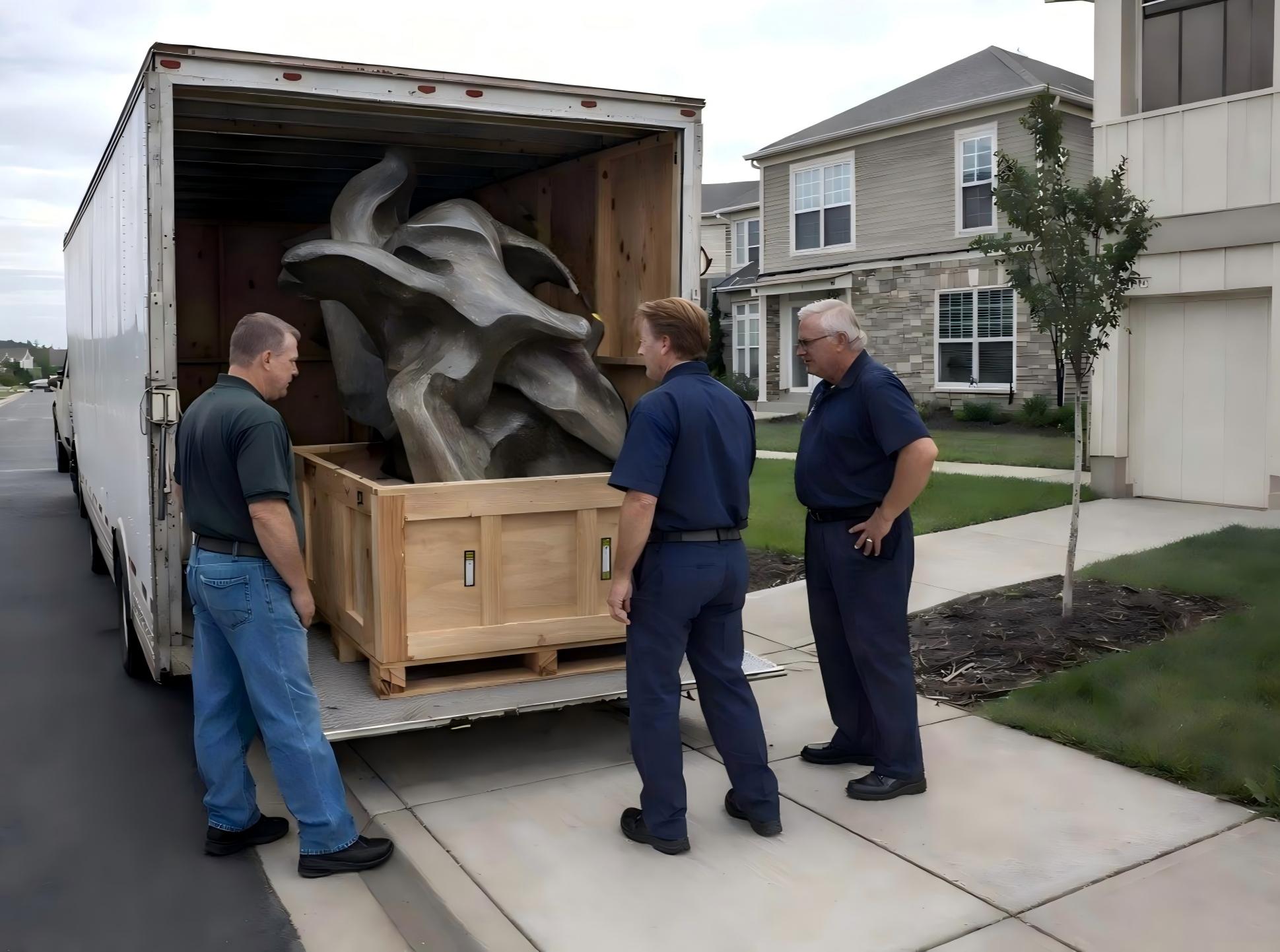
How large sculpture delivery differs from everyday furniture
Large sculptures are handled very differently from sofas or dining tables. A heavy marble statue or a tall metal sculpture often has uneven weight distribution and fragile surfaces that cannot be tilted or laid flat. This means standard moving methods are often not appropriate. Planning must account for surface protection, load paths, and how the sculpture will be lifted and set down without twisting or sliding.

How property access should be evaluated before delivery
Access is one of the most common sources of unexpected problems. A large outdoor sculpture or a wide floor sculpture may require clear driveway access, sufficient turning space for trucks, and level ground for equipment. Narrow gates, soft soil, or steep slopes can all affect what tools are required. Measuring access paths ahead of time helps avoid last minute changes in equipment or scheduling.

How indoor installation differs from outdoor installation
Indoor placement focuses on door widths, hallway turns, ceiling heights, and floor load limits. A tall or vertical indoor sculpture may fit visually but still be difficult to maneuver through tight spaces. Outdoor placement focuses more on ground preparation, surface stability, and exposure. For example, a garden sculpture may require leveling or base preparation to keep it stable over time.

How handling equipment is selected for different sizes
Equipment is chosen based on weight, footprint, and height. Smaller items such as a tabletop sculpture can often be carried with padded dollies and hand protection. Medium sized bronze sculpture works may require pallet jacks and lift gate trucks. Large stone or metal works frequently require forklifts or crane service to move safely without stressing the structure or surface.

How packaging and crating reduce transport risk
Professional crating is designed to hold a sculpture firmly in place and protect sensitive areas. A stainless steel sculpture may resist cracking but still needs soft wrap to prevent surface marks. A fiberglass sculpture is lighter but can flex under pressure, so internal bracing inside the crate is important. Good packaging limits movement and reduces vibration damage.

How to respond if visible damage is found at delivery
Inspection at arrival is essential. If your custom sculpture shows visible damage, photos should be taken right away and the condition clearly noted on the Proof of Delivery before unpacking further. In some cases, it may be appropriate to refuse the delivery. When signing the POD, avoid writing “Manufacture Defect,” as this wording can complicate or slow down the shipping claim process. Keeping the original crate and packing materials also helps support a smoother resolution with the carrier and seller.

How placement affects handling risk during setup
Placement conditions can significantly affect handling risk during setup. Tight corners, narrow stairways, and finished surfaces all require added protection and slower movement. A bust sculpture placed on an upper floor may need stair padding, wall guards, and additional spotters to guide turns safely. A heavy figurative sculpture in an open lobby may allow more room, but still requires floor protection, careful rotation planning, and precise positioning to avoid surface contact during alignment.

Proper preparation makes future handling much easier. Providing clear driveway photos, street access images, and photos of the area around the property helps movers evaluate equipment needs in advance. Sharing measurements and weight estimates gives teams a clearer understanding of handling requirements.
For indoor works, route videos from entry points to the installation area are especially helpful. Photos of staircases, hallways, and the final placement area allow movers to plan turning angles, protection needs, and staffing levels. This preparation reduces guesswork and helps the entire moving and placement process run more smoothly.


