

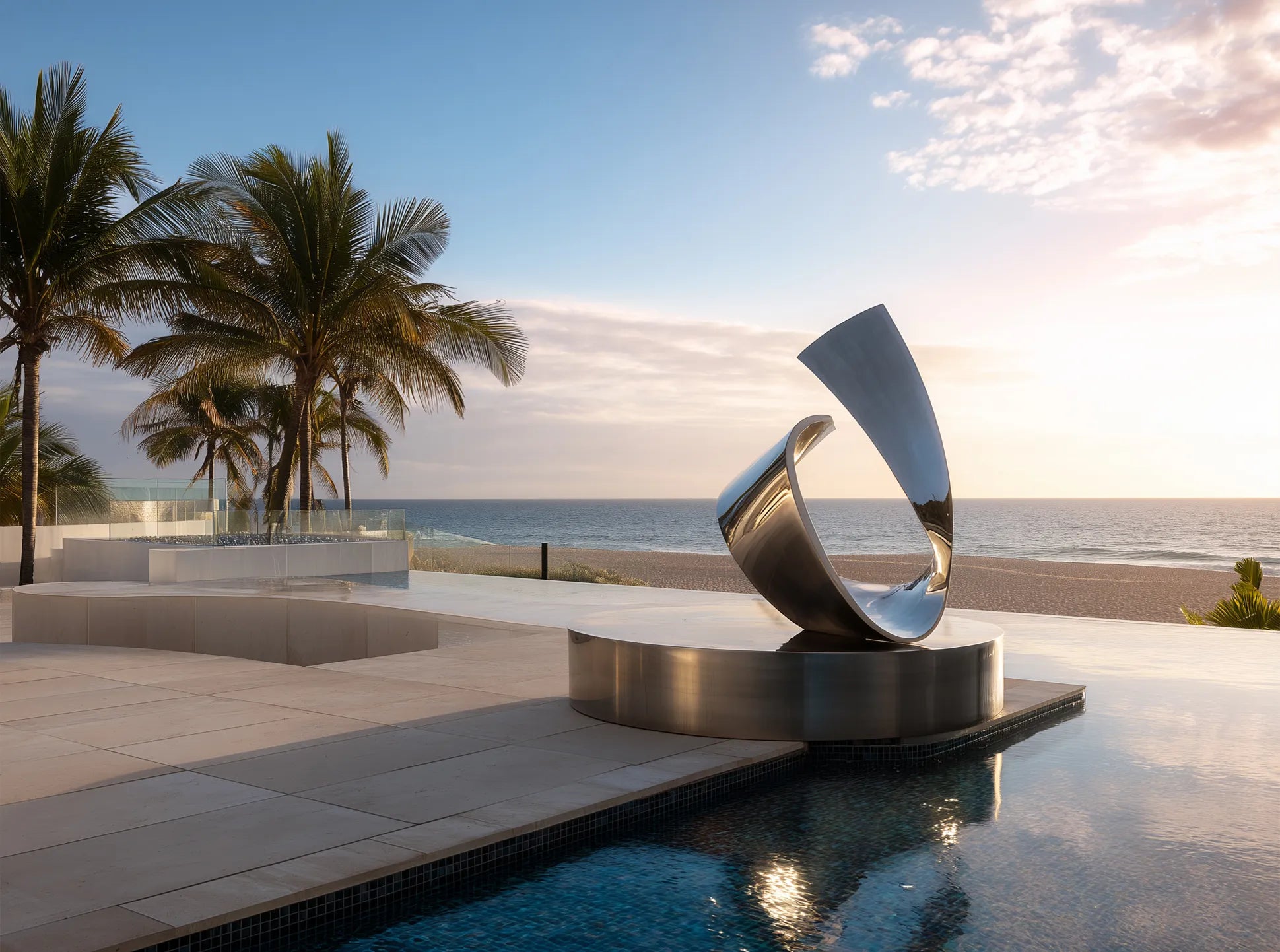
Key factors when planning sculptures near the coast
Installing a stainless steel sculpture in a coastal environment often begins with the appeal of open views, natural light, and a strong connection to the surrounding landscape. However, coastal climates introduce unique conditions. Salt carried in the air, consistent moisture, and regular ocean winds all influence how materials age. Thinking about these factors early helps ensure the sculpture continues to suit the space well beyond the initial installation.

How coastal air affects metal over time
Air near the ocean contains fine salt particles that repeatedly settle on exposed surfaces. Fog, sea spray, and wind accelerate this process. For a modern sculpture installed in outdoor settings, this typically results in gradual surface changes rather than immediate damage. Understanding this slow, cumulative effect allows buyers to focus on long-term durability rather than short-term appearance alone.

What stainless steel grades really mean for coastal use
Not all stainless steel behaves the same in marine environments. In coastal areas, 316 stainless steel is commonly preferred because its alloy composition offers better resistance to salt exposure. For a metal statue positioned closer to the shoreline, this often translates into more stable surface appearance over time.
In locations that are farther inland or where regular rinsing is practical, 304 stainless steel may still be appropriate. This can be a workable option for a garden sculpture placed in a partially sheltered setting, where direct salt exposure is more limited.

Why surface finish matters for coastal durability
The surface finish plays a major role in how a sculpture visually ages near the ocean. Mirror-polished surfaces tend to highlight water spots and salt residue, while brushed or satin finishes help soften these effects and make routine cleaning less noticeable.
This distinction is especially important for both commercial sculptures and minimalist sculptures, where surface quality strongly influences how the form is perceived. Selecting a finish that works with the environment often results in a more consistent and low-maintenance appearance over time.

Why coastal installation requires extra planning
Coastal installations require more than standard placement planning. Wind exposure, soil conditions, and drainage all affect how a floor sculpture performs outdoors. Typical solutions include concrete pads, embedded anchor systems, or concealed base plates, depending on site requirements.
Ensuring a properly leveled surface and confirming water runoff paths helps protect an outdoor sculpture from gradual movement and standing water. These installation details play a key role in long-term stability and appearance.

How form and scale interact with open coastal spaces
Open coastal environments change how sculpture shapes are experienced. Open-frame designs such as ring sculptures allow air to pass through, reducing visual and physical resistance to wind. Flowing form sculptures often feel grounded and natural within wide, open landscapes.
Rounded profiles tend to soften the horizon line, while linear or directional forms emphasize movement and sightlines. Considering how shape, light, and wind interact helps the sculpture feel visually balanced from multiple viewpoints.

How to maintain metal sculptures in coastal air
Maintaining a coastal sculpture usually involves simple, regular care. Rinsing with fresh water helps remove salt buildup from the surface. For basic cleaning, a soft cloth or non-abrasive sponge is generally sufficient.
Occasional visual inspections allow small changes to be addressed early. This routine approach helps keep both an art sculpture and its surrounding environment looking clean and well maintained over time.

When metal sculptures make sense in coastal settings
Metal sculptures often complement coastal spaces that emphasize clean structure and open views. At private residences, they work well in entry areas, poolside spaces, and along garden walkways. In shared environments such as resorts, hotels, and public coastal paths, metal forms also perform well under frequent exposure and daily interaction.
With thoughtful placement and appropriate material choices, a metal sculpture can feel like a natural extension of the coastal environment rather than a competing element.


